Quick answerThe main risk is iodine. Kelp and bladderwrack are seaweeds with very variable iodine content, and too much iodine can cause thyroid problems, especially in people who already have thyroid disease. Ashwagandha adds its own cautions: possible thyroid effects and rare liver injury. Anyone on thyroid medication, pregnant or breastfeeding, or with a thyroid diagnosis should talk to their doctor before taking it.
Iodine: why the missing dose matters
Adults need about 150 mcg of iodine a day, and the upper limit is 1,100 mcg from all sources. The American Thyroid Association notes that many kelp supplements contain far more iodine than that limit, and that people with pre-existing thyroid disease, older adults and pregnant or breastfeeding women are the most susceptible to harm.
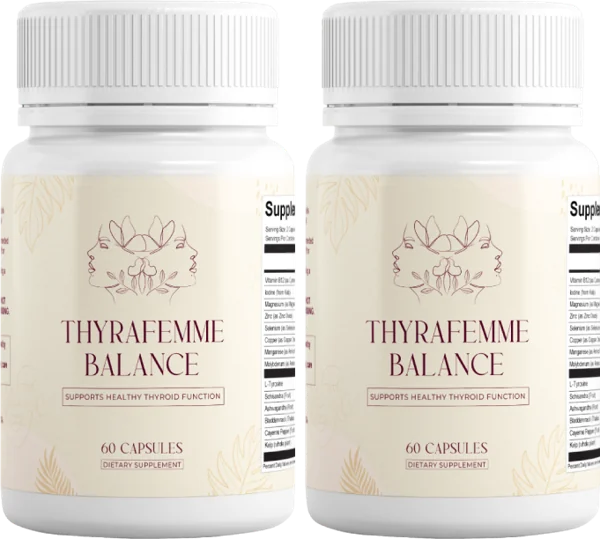
Too much iodine can either slow the thyroid down or speed it up. Thyrafemme Balance contains three seaweed or iodine sources and does not say how much iodine they add up to. If you also take a multivitamin with iodine and use iodized salt, your total can climb quickly.
Possible side effects, ingredient by ingredient
| Ingredient | What has been reported |
|---|---|
| Kelp, bladderwrack, iodine | Thyroid over- or underactivity with excess intake. Seaweed can also carry heavy metals such as arsenic. |
| Ashwagandha | Upset stomach, loose stools, drowsiness. Rare liver injury. May affect thyroid hormone levels. |
| Selenium | Safe at usual doses; too much over time causes hair loss, brittle nails and a garlic odor. Upper limit is 400 mcg a day. |
| L-tyrosine | Usually well tolerated; may add to the effect of thyroid medication. |
| Cayenne | Heartburn or stomach irritation in sensitive people. |
| Zinc, copper, manganese, molybdenum, magnesium, B12 | Generally safe at supplement doses; add them to any other supplements you take. |
Medications to watch
- Thyroid hormone (levothyroxine, liothyronine, desiccated thyroid): iodine, tyrosine and ashwagandha can change thyroid levels, and minerals can reduce how well the medication is absorbed. Take nothing new without your doctor.
- Antithyroid drugs (methimazole, propylthiouracil): extra iodine works against them.
- Lithium and amiodarone: both affect the thyroid, and adding iodine raises the risk.
- ACE inhibitors, ARBs and potassium-sparing diuretics: kelp is a source of potassium as well as iodine.
- Sedatives, diabetes and blood pressure medication: ashwagandha may add to their effects.
Who should not take it without medical advice
- Anyone with hypothyroidism, hyperthyroidism, Hashimoto's, Graves' disease or thyroid nodules.
- Anyone taking thyroid or antithyroid medication.
- Pregnant or breastfeeding women.
- People with liver disease.
- People scheduled for a thyroid scan or radioactive iodine treatment.
- Anyone under 18.
Warning signs: stop and call a doctor
A racing heart, tremor, sweating, weight loss or anxiety can signal an overactive thyroid. New tiredness, feeling cold or swelling in the neck can signal the opposite. Yellow skin or eyes or dark urine can signal a liver problem.
Back to the Thyrafemme Balance review.
Frequently asked questions
Can too much iodine harm the thyroid?
Yes. Iodine intakes above the upper limit of 1,100 mcg a day can cause thyroid dysfunction, and people with existing thyroid disease, older adults and pregnant or breastfeeding women are more sensitive. Kelp content varies, so a kelp supplement can deliver more than its label suggests.
Does Thyrafemme Balance affect thyroid blood tests?
It can. Iodine and ashwagandha may change thyroid hormone levels. Tell your doctor about any supplement before thyroid testing, so results are not misread.
Is Thyrafemme Balance safe during pregnancy?
Not without your doctor. Iodine needs and limits are different in pregnancy, and ashwagandha may not be safe for pregnant or breastfeeding women.